
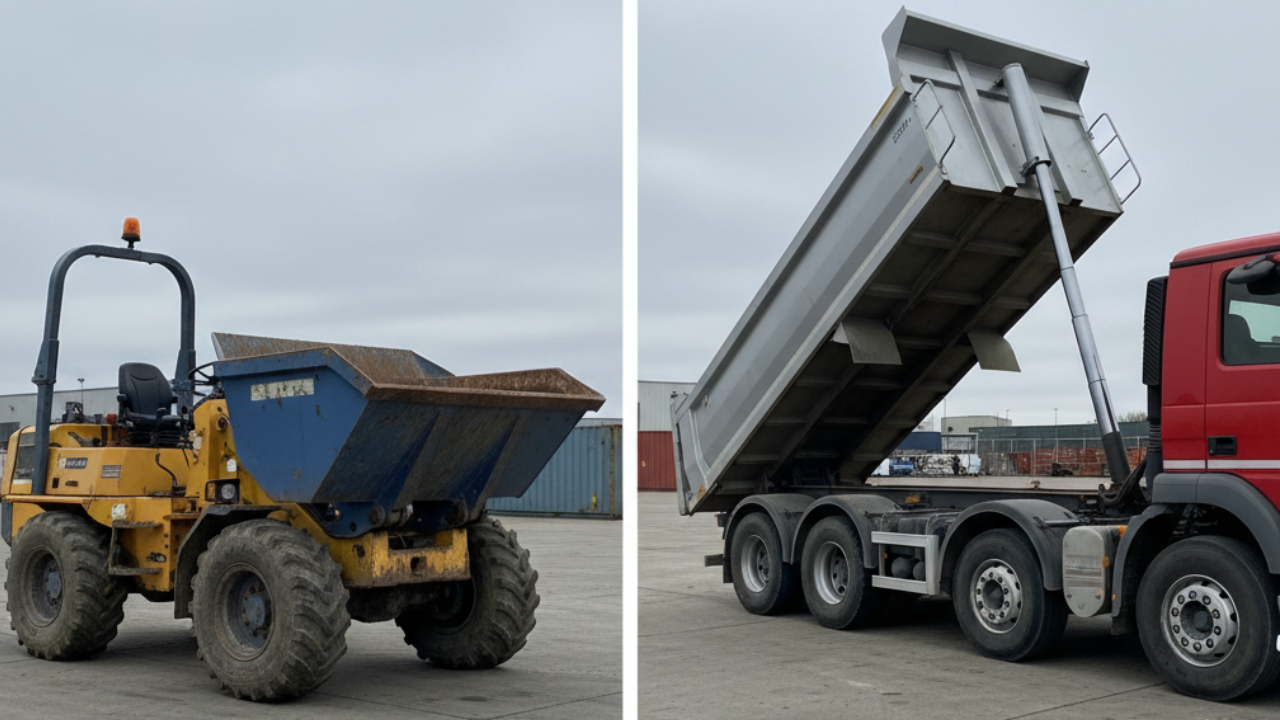

Dump Truck vs Tipper Truck: Meaning, Dumper Differences & Capacity Guide
Dump and tipper truck are two common names used to transport materials used in construction, agriculture, and waste management. Many people are confused whether they’re the same or different types of trucks. So, let’s delve into the details and understand the key differences between a dump truck and a tipper truck.
Does Dump And Tipper Truck Mean The Same Thing?
The tipper and dump are not different types of trucks, but they are different names for the same type of vehicle. In United States and Canada, it is commonly referred to as a dump truck, whereas in United Kingdom and other parts of Europe, it is known as a tipper truck. While UAE, India, Australia, and other countries tend to use both terms interchangeably.
What is the Difference Between a Dumper and a Dump Truck?
As you know dump and tipper truck are the same but the term “dumper” may refer to a slightly different type of vehicle. Dumper have the same function of transporting heavy materials, but they are usually smaller and can be operated in narrow spaces. They are commonly used in construction sites for moving materials such as sand, gravel, and soil.

Dumper trucks have a lower maximum weight capacity compared to dump trucks, with most models having a maximum capacity of 10 -15 tons. Whereas dump trucks can have a capacity of up to 400 tons. This makes dump trucks more suitable for larger construction projects or mining operations where large quantities of material need to be transported at once.
| Feature | Dumper (Site Dumper) | Tipper Truck / Dump Truck |
|---|---|---|
Primary Terminology |
"Dumper" is the standard term globally for this specific small vehicle. |
"Tipper Truck" (UK, Aus, India). "Dump Truck" (US, Canada). Often used interchangeably. |
Size & Capacity |
Very small. Typically carries 1 to 3 cubic meters (1-4 tons). |
Very large. Ranges from 10 cubic meters for a standard truck to over 40 cubic meters for mining trucks. |
Design & Operation |
The skip (bucket) is in the front. The operator sits behind it and drives it like a small tractor. It dumps forward. |
The cargo bed is behind the cab. It is lifted by hydraulics to dump the load out of the back. |
Primary Use |
Moving materials within a confined construction site (e.g., moving bricks, mortar, dirt around a building plot). |
Transporting large quantities of materials between locations (e.g., from a quarry to a construction site). |
Mobility |
Highly maneuverable, compact, often with four-wheel drive and articulation for tight spaces. |
Less maneuverable. Requires significant space to turn and operate. |
Driver Position |
Operator sits on top of the vehicle in an open or small enclosed cabin. |
Driver sits inside a enclosed cab at the front of the vehicle. |
Wrap Up:
Both dump trucks and dumper trucks play important roles in construction, mining, and other heavy-duty industries. While they may have similar functions and features, their designs cater to different needs and applications. By understanding the differences between these two types of trucks, it becomes easier to determine which one is most suitable dumper for a particular job or project.
So whether you need to move large volumes of material quickly or navigate rough terrain, dump or tippers and dumper trucks are reliable and versatile options for any heavy-duty hauling task. You don’t have to limit yourself to just one type of truck – depending on the scope and requirements of your project, you can choose a combination of both dump and tipper trucks to get the job done efficiently.

Vinisha Pereira is a logistics specialist with over seven years’ hands-on experience coordinating the safe, timely transport of heavy machinery and equipment across the UAE. She combines a strong foundation in engineering principles with an in-depth understanding of regional regulations and multimodal shipping methods to design transport solutions that minimize risk and downtime.
A regular contributor to industry forums and technical workshops, Vinisha shares practical best practices for load planning, route optimization and on-site handling. Her reputation for clear communication and data-driven decision-making has earned the trust of project managers, equipment OEMs and site supervisors throughout the Gulf region.

If you have any questions or concerns about our services, our team of friendly and knowledgeable customer service representatives are available to assist you.
