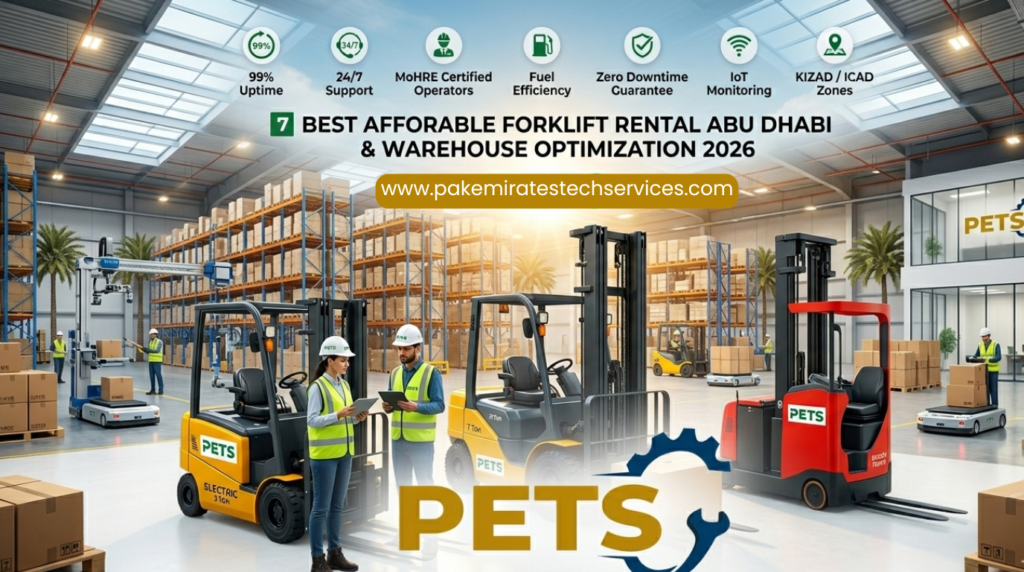
Affordable Forklift Rental Abu Dhabi is the primary driver for operational efficiency in the UAE’s rapidly expanding logistics sector in 2026. As the industrial hubs of KIZAD and ICAD continue to scale, securing high-performance material handling equipment without massive capital expenditure is a strategic necessity for every warehouse manager. At Pak Emirates Tech Services (PETS), providing the most reliable and Affordable Forklift Rental Abu Dhabi is our core commitment to supporting the region’s supply chain infrastructure.
That’s why material handling matters more in 2026. If your floor plan, lift fleet, and labor plan don’t work together, every extra meter becomes a hidden cost. For warehouse managers, 3PL teams, and site supervisors, small fixes often unlock the biggest gains.
Why material handling decisions matter more in 2026
Pressure is rising from both sides. Customers want faster turnaround, while operating costs keep climbing. As a result, warehouses in Abu Dhabi, KIZAD, and ICAD can’t afford to waste motion.
Material handling is the heartbeat of the site. When it’s healthy, goods flow with less waiting, fewer touches, and better stock control. When it’s weak, the whole operation feels like traffic at a busy roundabout.
In 2026, three shifts stand out. First, operators need more flexible equipment plans because order mix changes faster than before. Second, floor space has become more valuable, so storage density matters more. Third, uptime now drives profit, because a parked forklift can slow receiving, put-away, picking, and dispatch all at once.
That’s where Affordable Forklift Rental Abu Dhabi becomes a practical choice, not only a cost-saving move. Renting gives teams room to match the truck type to the workload. A counterbalance forklift may suit yard transfer, while a reach truck fits narrow warehouse aisles better. If your demand changes by season or by project phase, that flexibility helps.
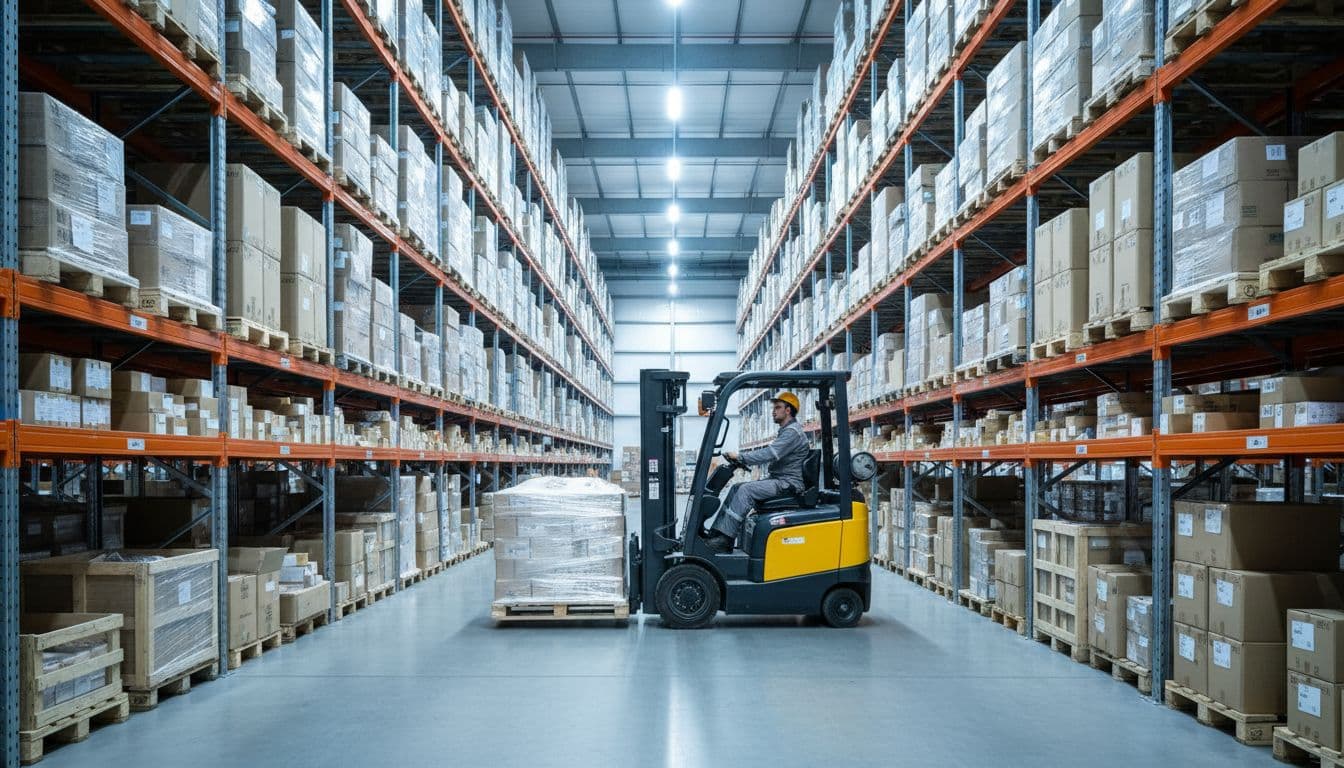
A smart material handling plan also lowers risk. Better truck fit means fewer product touches, cleaner travel lanes, and less operator fatigue. In other words, the right machine not only moves pallets, but it also protects time.
If one forklift creates a queue at receiving, the issue isn’t only equipment count. It may be layout, slotting, or poor task timing.
Find Affordable Forklift Rental Abu Dhabi Here
For teams that run mixed operations, rental can also connect well with broader fleet planning. If your site needs more than forklifts, this guide to heavy equipment rental in Dubai gives useful context on flexible fleet decisions across UAE projects.
Warehouse optimization starts with layout, flow, and visibility
Many warehouses chase speed by asking people to work harder. That rarely lasts. A better approach is to reduce wasted steps, turns, and searches.
Start with travel distance. Put fast-moving stock closer to dispatch and receiving touchpoints. Then review aisle width, rack spacing, and crossing points. If forklifts and pickers keep cutting across each other, delays will keep returning. Good flow should feel like water through a pipe, not pinballs bouncing around the floor.
Next, look at slotting. Heavy items should sit where handling is safest and quickest. Similar items should stay where picking logic makes sense. When slotting drifts over time, teams spend more minutes hunting and repositioning. Those minutes don’t look dramatic, but they stack up every shift.
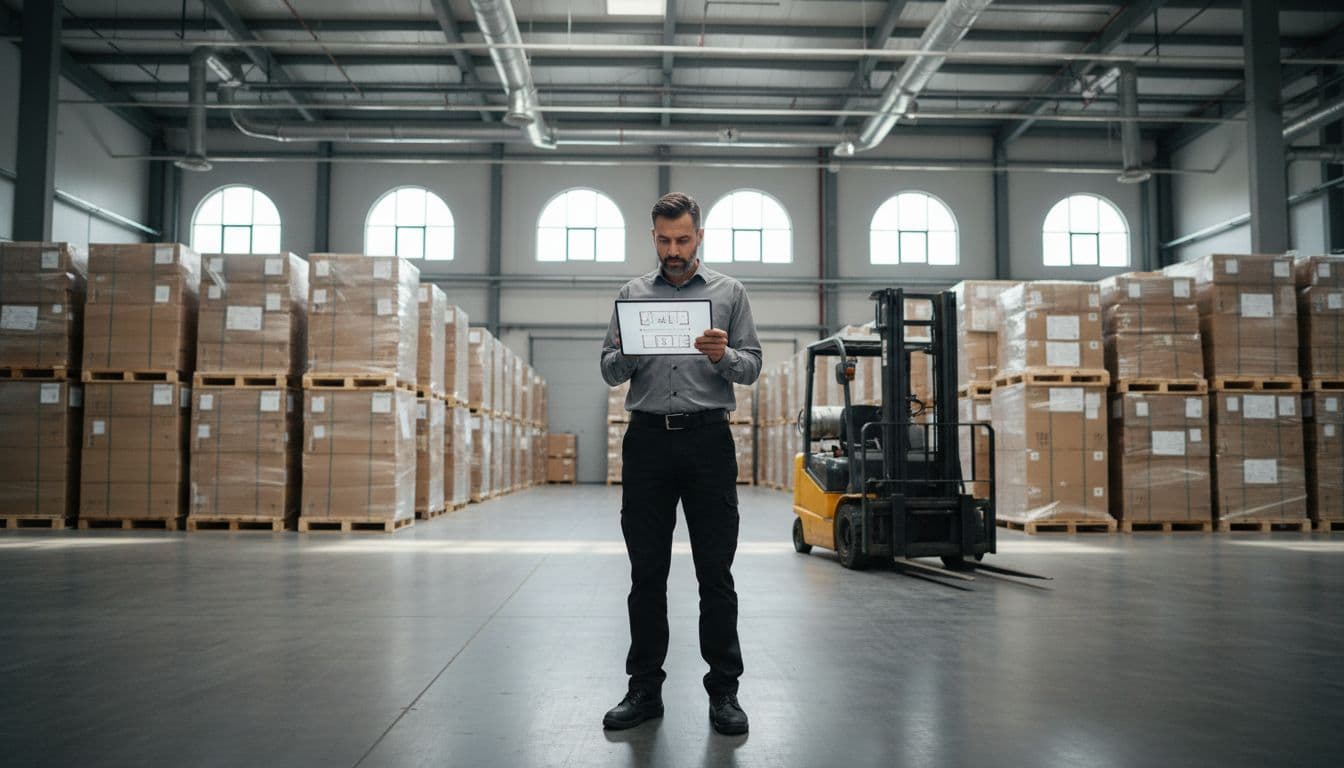
Visibility matters too. Supervisors should know where congestion starts, which trucks idle too long, and which zones create repeat bottlenecks. Even a simple daily review of load times, queue points, and damaged pallet reports can reveal patterns. You don’t need a large system upgrade to spot waste. Often, a one-week observation cycle is enough to show where the floor fights back.
Labor planning ties all this together. Skilled drivers reduce product damage and use equipment more effectively. Meanwhile, poor matching between labor and truck type creates avoidable slowdowns. A great reach truck with an undertrained operator won’t fix a broken process.
A few practical moves usually deliver quick wins:
- Re-slot top SKUs closer to shipping lanes to cut travel time.
- Separate pedestrian and forklift paths where traffic overlaps.
- Match truck type to aisle width and load height before peak periods.
- Track idle time by zone so you can fix chokepoints fast.
Most importantly, review your process at shift level, not only monthly. Problems often show up in the first hour, during lunch overlap, or near dispatch cut-off times.
Rent or buy forklifts for warehouse optimization?
The rent versus buy decision shapes both cost control and uptime. Buying gives long-term asset control, but it also locks in capital, service planning, and replacement timing. Renting offers flexibility, which matters when workload changes from one contract to the next.
This quick comparison shows where each option tends to fit:
| Factor | Renting | Buying |
|---|---|---|
| Upfront cost | Lower | Higher |
| Flexibility | High | Limited |
| Maintenance burden | Usually lower | Usually higher |
| Best for seasonal demand | Yes | Not always |
| Best for fixed long-term use | Sometimes | Often |
For many operators, Affordable Forklift Rental Abu Dhabi makes sense when demand shifts, projects are short-term, or uptime matters more than ownership. If one truck goes down, replacement speed can matter more than balance-sheet pride.
Still, renting only works well when the supplier understands your site. Truck type, mast height, fuel choice, operator skill, and service response all affect results. A cheap rental that doesn’t fit the aisle or load profile becomes expensive fast.
So, don’t judge rental by daily rate alone. Measure total working value. That includes uptime, fuel use, safety fit, and how well the truck supports your warehouse flow.
The strongest warehouse gains come from a better fit
Warehouse optimization in 2026 isn’t about chasing bigger systems. It’s about tighter flow, better layout choices, and equipment that matches the job.
If your site feels busy but still falls behind, start with movement. Review where goods wait, where forklifts queue, and where staff lose time. The answer is often simpler than it looks.
Choose fit over habit, then build from there. One smarter forklift decision can change the pace of the whole warehouse.
According to the Abu Dhabi Industrial Strategy (ADIS), the emirate is set to double its manufacturing sector by 2031, making efficient material handling more critical than ever.