Understanding Forklifts and Telehandlers: A Complete Guide
Have you ever noticed how often people confuse forklifts with telehandlers? These two types of vehicles are commonly mistaken for each other, but they actually have some significant differences. Both of these machines are used for lifting and moving heavy loads, but they serve different purposes and have distinct features that set them apart from one another.
Forklift:
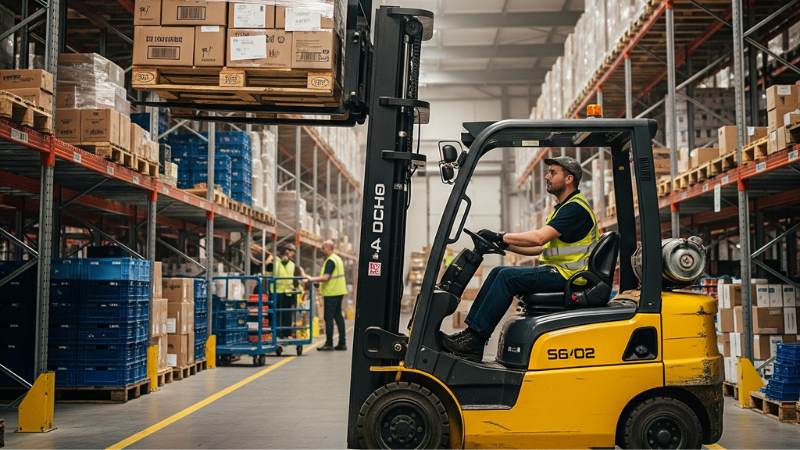
Forklifts, also known as lift trucks or powered industrial trucks, are primarily used indoors in warehouses, factories, and other industrial settings. They are designed to move vertically so that they can lift and transport pallets, crates, and other loads to different levels of a warehouse or building. Forklifts have two forks attached to the front of the vehicle that can be raised and lowered, allowing them to pick up and move heavy objects.
Types:
- Counterbalance forklift: This is the most common type of forklift and has a weight at the back to balance the weight being carried on the forks.
- Order picker: Designed specifically for picking items from shelves or racks at height.
- Pallet jack: A manual type of forklift that requires the operator to pump a handle to lift and move pallets.
- Electric forklift: Powered by electricity, these forklifts are suitable for indoor use and emit zero emissions.
- Rough Terrain: Designed for outdoor use on uneven and rough surfaces, with large tires and a sturdy frame.
Telehandler:
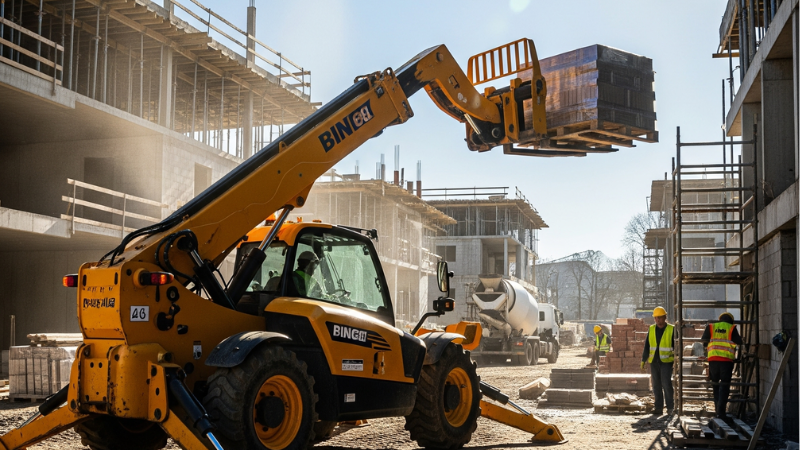
Telehandler (Boom Lifter) is a versatile type of forklift that combines the capabilities of a crane and a forklift. It has a telescopic boom that can extend forward and upward, allowing it to reach heights and distances that traditional forklifts cannot. The main difference is that telehandlers are designed to carry and lift loads horizontally and vertical, whereas forklifts are only able to lift loads vertically.
Telehandlers are used in various industries such as construction, agriculture, landscaping, oil and gas, and mining. They are ideal for handling bulky materials like lumber, pipes, hay bales, and palletized goods. With their multiple attachments available on the market today, telehandlers can also be used as a crane with a jib attachment or as an aerial work platform with a bucket attachment.
Types:
- Compact Telehandlers: These telehandlers are smaller in size and have a lower lifting capacity compared to other types. They are ideal for use in tight spaces and can easily maneuver around obstacles.
- Standard Telehandlers: This type of telehandler is the most commonly used and has a lifting capacity ranging from 2,500 to 12,000 pounds. They can handle various tasks such as loading/unloading materials, moving pallets, and lifting heavy objects.
- Heavy-Duty Telehandlers: As the name suggests, these telehandlers have a higher lifting capacity ranging from 24,000 to 100,000 pounds. They are designed for heavy-duty tasks and can handle larger loads.
- Rotating Telehandlers: This type of telehandler has a rotating turret that allows it to move materials in any direction, making it ideal for use in confined spaces or on uneven terrain.
- Telescope Boom Lift: A versatile machine that combines the capabilities of a telehandler and a boom lift, allowing for both horizontal and vertical reach. It is commonly used in construction, renovation, and maintenance projects.
- Articulating Boom Lift: This type of lift has multiple jointed sections that allow it to maneuver around obstacles and work in tight spaces. Its ability to reach up, over, and across makes it suitable for tasks such as window cleaning or tree trimming.
Forklift vs. Telehandler:
As we have discussed, there are many different types of lifting equipment available for various tasks. Among these options, you may have heard of both a forklift and a telehandler. While they may seem similar at first glance, there are some key differences that set them apart.
Features
Forklift
Telehandler
Lifting palletized loads vertically
Lifting, placing, and reaching over obstacles.
Lifting, placing, and reaching over obstacles.
Telescopic boom with attachments extends forward and upward.
Limited by mast height. Maximum capacity at full height.
Reach combines boom extension and height, with capacity decreasing as the boom extends.
Great for tight spaces with a small turning radius.
Less maneuverable due to larger body and longer boom.
Designed for rough terrain with 4-wheel drive and rugged tires.
Designed for smooth, hard surfaces.
The operator's view through the mast rails can cause blind spots.
The operator has a clear view of the load and fork tips with the boom in front.
Uses forks, with optional attachments like rotators or clamps.
Compatible with forks, buckets, winches, jibs, and personnel platforms.
Warehousing, logistics, manufacturing, loading, retail.
Construction, agriculture, industry—roofing, trenching, and stocking hard-to-reach areas.
Most have rear-wheel steering for tight turns.
Offers 2-wheel, 4-wheel, and crab steer for improved on-site maneuverability.
Wrap Up:
Forklifts and telehandlers are both essential pieces of equipment in various industries, such as construction, warehousing, and agriculture. But keep in mind these machinery are expensive, and proper training and certification are required to operate them safely. Therefore, renting or leasing forklifts or telehandlers may be a more cost-effective option for some businesses.

If you have any questions or concerns about our services, our team of friendly and knowledgeable customer service representatives are available to assist you.